
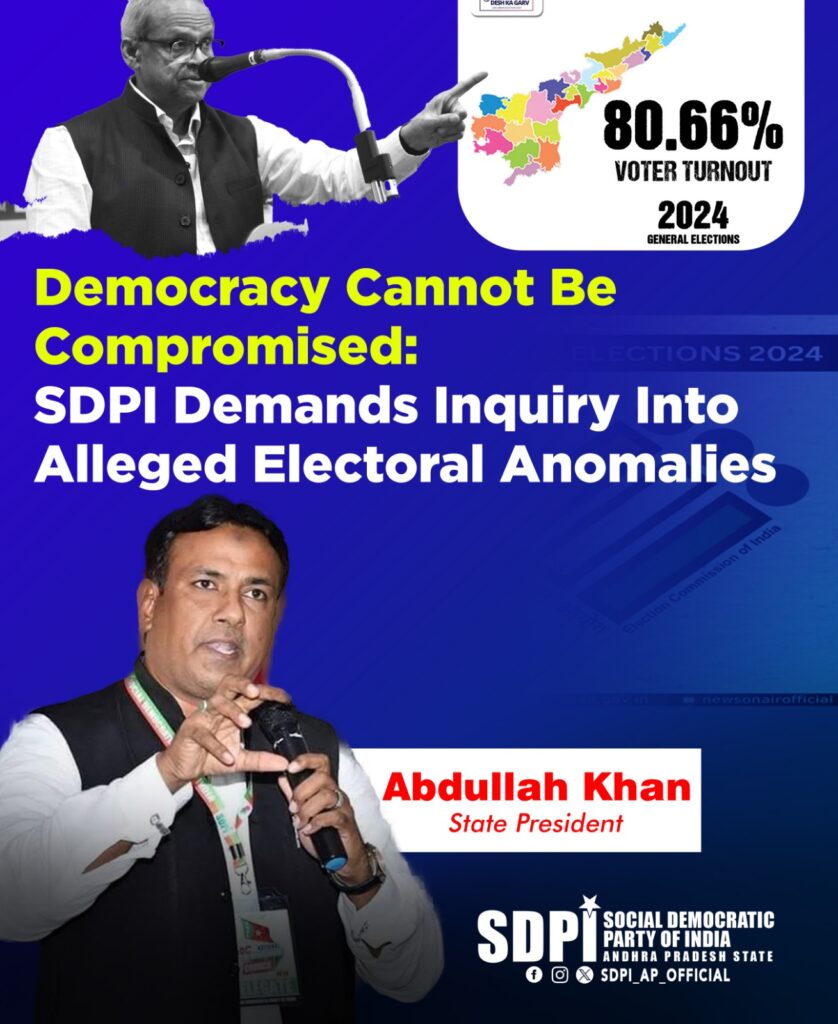
Democracy Cannot Be Compromised: SDPI Demands Inquiry Into Alleged Electoral Anomalies
Abdullah Khan, State President of the Social Democratic Party of India, Andhra Pradesh, strongly condemns the serious concerns surrounding the conduct of the 2024 Lok Sabha and subsequent Assembly elections, particularly allegations by Parakala Prabhakar (Political Economist) regarding unexplained turnout surges, voter list deletions, and transparency gaps in electoral data reporting. Reports suggesting an addition of nearly five crore votes between provisional and final turnout figures, allegedly affecting 79 constituencies across 15 states, raise fundamental questions about electoral credibility. While official authorities maintain that turnout figures evolve due to delayed data aggregation from polling stations and returning officers, the scale and timing of these variations have generated widespread public anxiety. Claims of heavy voting during late evening and post polling hours, including social media discussions about votes being counted or recorded between late night and early morning hours, have not been supported by verified documentary evidence, as election law does not permit polling beyond scheduled closing times except for voters already standing in queues.
Equally disturbing are allegations of abnormal post evening turnout spikes in states such as Andhra Pradesh, where participation reportedly rose sharply from around 68 percent at evening reporting times to over 81 percent in final figures. Critics argue that such rapid increases, particularly within limited time windows, require closer scrutiny, even though authorities explain these as results of continuous data transmission and aggregation processes rather than actual late night voting. Concerns have also been raised regarding similar turnout fluctuations in Maharashtra and Haryana, along with questions about administrative and technical safeguards in electronic voting systems. The reported deletion of nearly 65 lakh names from voter rolls during revision exercises in Bihar has further deepened fears of possible disenfranchisement of vulnerable communities, making it imperative to ensure that electoral revisions follow transparent and impartial procedures.
Abdullah Khan demands a time bound, independent judicial inquiry into all allegations concerning turnout discrepancies, voter list revisions, and the functioning of electronic voting and verification systems. He asserts that democracy cannot survive on technical explanations alone when public confidence is at stake. The Election Commission of India must proactively release detailed booth level data, strengthen transparency mechanisms, and address public concerns with credible evidence. If these serious issues remain unaddressed, the moral legitimacy of India’s electoral process could suffer lasting damage, and the people’s faith in democratic institutions may continue to decline.

No Comments