
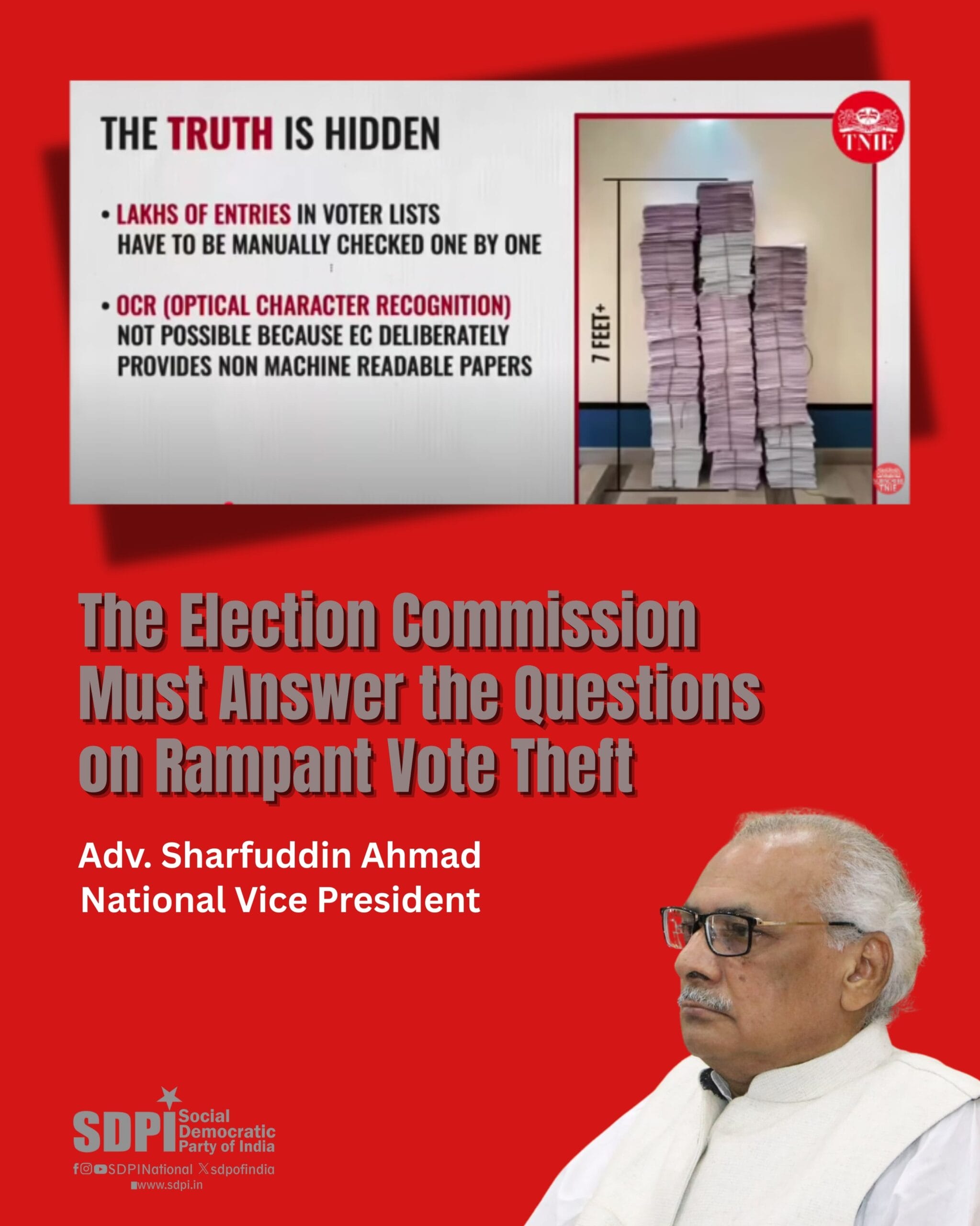
The Election Commission Must Answer the Questions on Rampant Vote Theft
The Election Commission of India is facing serious public criticism about the ways in which it allegedly helped the ruling party steal the Lok Sabha elections in 2024 and some Assembly elections as well as its overzealous moves to bulldozer its intensive roll revisions in states like Bihar, riddled with several inconsistencies that could disenfranchise a large section of our citizens.
The Opposition parties have now taken to the streets with massive agitations demanding the ECI to make inquiries into the incidents of vote theft in the last Lok Sabha elections as well as to rectify the problems caused by the rushed special intensive revision (SIR) which has removed as many as 65 lakh names from Bihar’s electoral rolls. The public agitation against electoral malpractices appear to be gaining strength and momentum as more political parties are raising criticism, and more allegations raised about past misdeeds in conducting elections.
The situation has become much more complicated, mainly because of the refusal on the part of the constitutional authority to address the criticism in a fair and impartial manner as also the way the ruling BJP has made efforts to politicize the issue instead of allowing the law to take its own course. It would seem that some BJP leaders have taken over the role as spokespersons for the Election Commission.
The ECI response to Opposition leader Rahul Gandhi’s allegations with fact and figures has been less than credible. Mr Gandhi has raised serious questions, with well researched facts and figures based on the ECI’s own documents. He has focused on the malpractices in the Mahadevapura Assembly segment in Bangalore Cental Lok Sabha constituency, based on a critical examinations of the rolls. He has raised five major issues in the rolls, including large numbers of duplicate voters, fake and invalid addresses, bulk voters at a single address, invalid photos, and misuse of Form 6 for registering new voters.
Despite the allegations being in public sphere for several days and the matter now becoming an issue of major public agitations all over India, the ECI authorities have refused to engage political parties and investigate the cases in an impartial manner. Instead of taking the matters into its hands to dispel public distrust about the perceived electoral malpractices, it has taken the line that if the Opposition leader has any complaints, he could file such complaints “under oath.” This is ridiculous as even the Supreme Court often takes action suo moto when public trust in the foundations of our democratic system is involved.
The credibility and impartiality of the electoral process is a matter of grave public importance in a democracy. This is what differentiates a democracy from autocracies and dictatorships. In a democracy, the will of the people is paramount and this will is expressed in a free and fair election. Hence the credibility of the system as well as the agency that oversees it is very important. But unfortunately, by taking refuge in mere technicalities instead of addressing the concerns head on, the Election Commission is undermining its own authority and public stature. It will definitely damage the institution as well as the Indian democratic system in the long run.
So it is absolutely necessary that the ECI comes out of its hibernation and order a strict and careful examination of the cases and take stringent action that such incidents do not repeat in the future. Also, it is time to think of a serious review of how the system functions and overhaul the manner in which the Election Commissioners are appointed. The Supreme Court had suggested that the Chief Justice of India also be part of the body that selects Election Commissioners, but the Government under Prime Minister Narendra Modi had not acceded to it. Now it is clear why they did not want an independent judicial authority to be part of it, as we see the Election Commission being reduced to an appendage to the ruling political party and its government, and not an impartial constitutional authority.
Adv. Sharfuddin Ahmad
National Vice President
Social Democratic Party of India

No Comments