
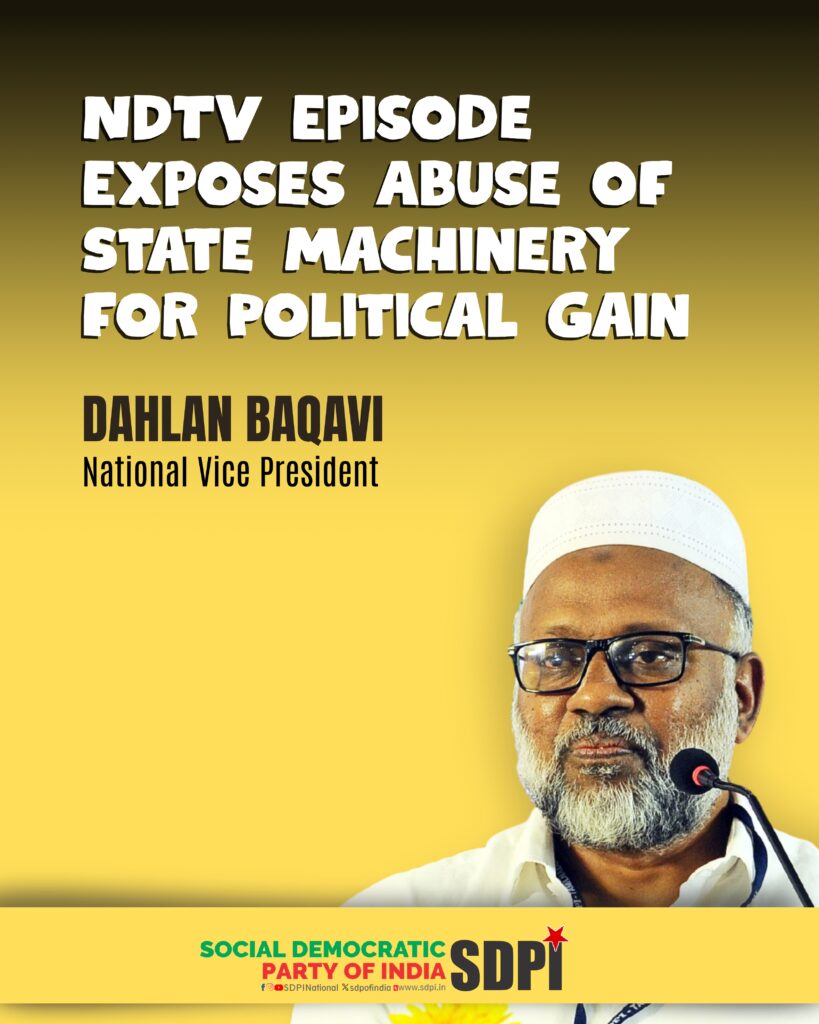
NDTV Episode Exposes Abuse of State Machinery for Political Gain
In the shadow of India’s vibrant democracy, a troubling narrative unfolds in which the Union Government under Prime Minister Narendra Modi appears to wield state machinery to muzzle dissenting voices and bend the press to its will. The recent Delhi High Court verdict quashing the 2016 income tax reassessment notices issued against Prannoy Roy and Radhika Roy, founders of NDTV, exposes this alleged vendetta in stark relief. The court deemed the proceedings arbitrary and unconstitutional, imposed a fine of ₹2 lakh on the Income Tax Department, and observed that no cost would be sufficient to compensate for such harassment. The ruling highlights how repeated probes into a decade-old loan transaction were allegedly weaponized to pressure a media house known for its critical editorial stance.
The narrative deepens with the Adani Group’s 2022 acquisition of NDTV, a development that followed years of relentless investigations by agencies such as the Central Bureau of Investigation and the Enforcement Directorate. What began as financial scrutiny ultimately culminated in a corporate takeover that shifted NDTV’s editorial independence toward alignment with ruling interests. This pattern is not isolated; the present regime has transformed enforcement bodies into instruments of political suppression. The party’s National President, M. K. Faizy, is also cited as a victim of this political vendetta. Measures ranging from the blocking of thousands of social media accounts, including those of journalists and activists, to the banning of organizations on contested terror charges are presented as evidence of a broader assault on free speech, protest, and constitutional guarantees.
Why has a significant section of the media remained silent on the decisive verdict of the Delhi High Court exposing the questionable actions behind this case? It is imperative that opposition parties and democratic forces raise their voices collectively and resist this continuing pattern of political vendetta and institutional misuse.
Such actions, the Social Democratic Party of India asserts, erode press freedom and risk turning sections of the media into extensions of state power rather than guardians of truth. The party strongly condemns what it describes as an authoritarian and repressive trajectory in which censorship, surveillance, and arrests are used to silence dissent, including the targeting of its own leaders who speak for marginalized communities. It calls for accountability and urges citizens to remain vigilant in defending democratic values. Only through collective resistance and constitutional commitment, the statement concludes, can a free press and a just India be secured.
Dahlan Baqavi
National Vice President
Social Democratic Party of India

No Comments