
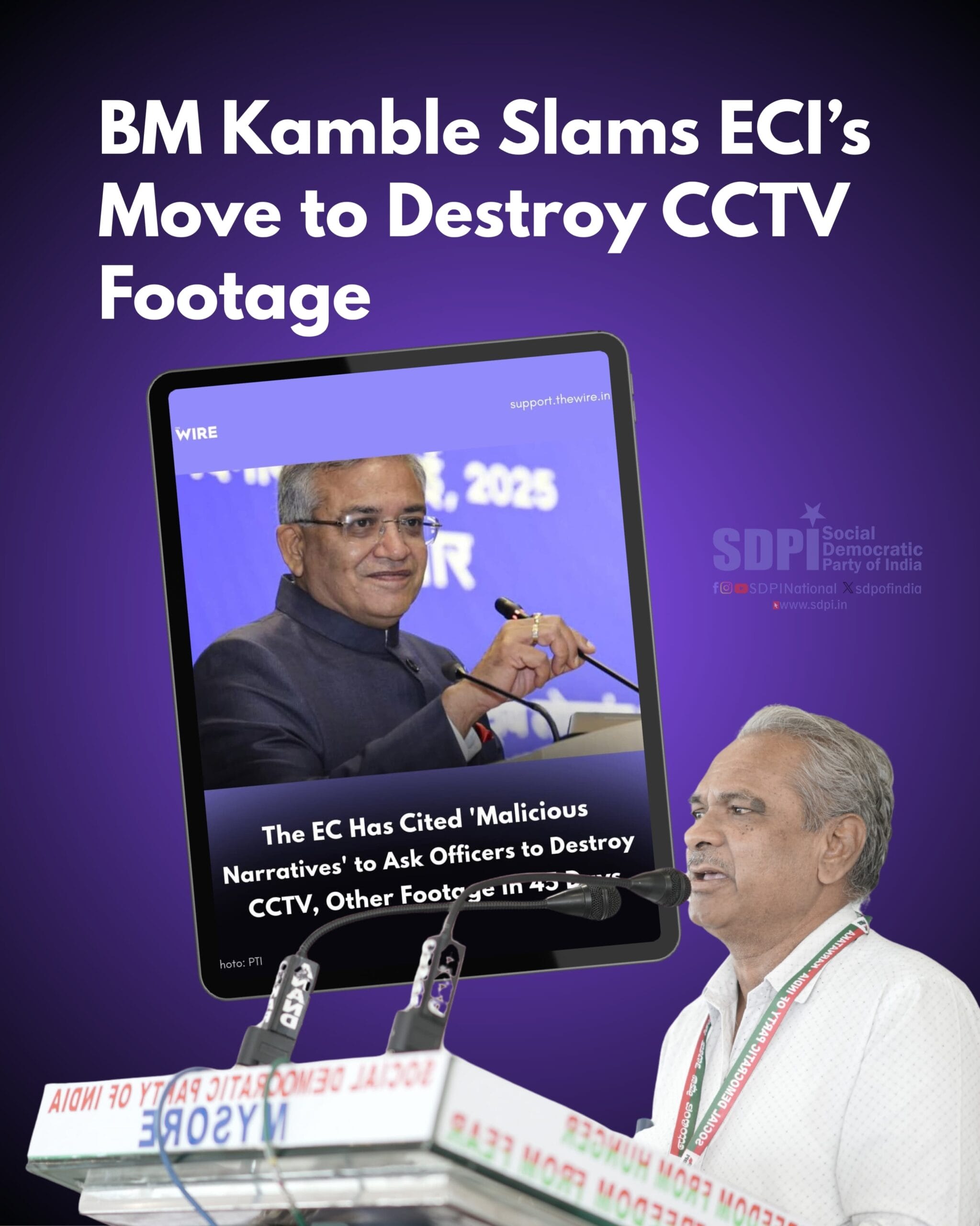
BM Kamble Slams ECI’s Move to Destroy CCTV Footage
BM Kamble, National Vice President of the Social Democratic Party of India, strongly condemns the Election Commission of India’s decision to destroy CCTV, webcasting, and video footage of the electoral process within 45 days of poll results unless challenged through an election petition. This move, alongside the recent amendment to Rule 93 of the Conduct of Election Rules, 1961, which limits public access to such footage, raises grave concerns about transparency and accountability.
The ECI claims this footage may be misused to create “malicious narratives” using AI. However, this justification is flimsy and undermines the public’s right to verify election integrity. CCTV footage is a crucial public record, and its premature destruction appears designed to shield electoral malpractices from scrutiny. The 2024 Maharashtra Assembly elections saw serious allegations—such as a suspicious 7.83% voter turnout surge post-5 p.m. and selective voter roll additions. Access to CCTV footage could have validated or debunked such claims. By enforcing a 45-day destruction window, the ECI closes the door on independent verification and undermines citizen trust.
The ECI’s argument that such footage is for “internal management” contradicts its earlier practice of providing access under the Right to Information Act. This policy shift, especially after the Punjab and Haryana High Court directed greater transparency, suggests an institutional attempt to avoid disclosure. Moreover, retaining massive data—as in the case of Malkajgiri’s 84 terabytes—only to discard it arbitrarily raises further doubts. Limiting access based on the 45-day petition window wrongly assumes all irregularities are discovered and contested immediately—an unrealistic expectation for ordinary citizens. Rather than preventing misuse, the ECI is enabling opacity and weakening democratic accountability.
The SDPI demands the ECI reverse this decision, extend footage retention to at least one year, and ensure public access under RTI. Independent audits of voter rolls and surveillance data are essential to restoring trust. Democracy depends on transparency—ECI must act to preserve it, not erode it

No Comments