
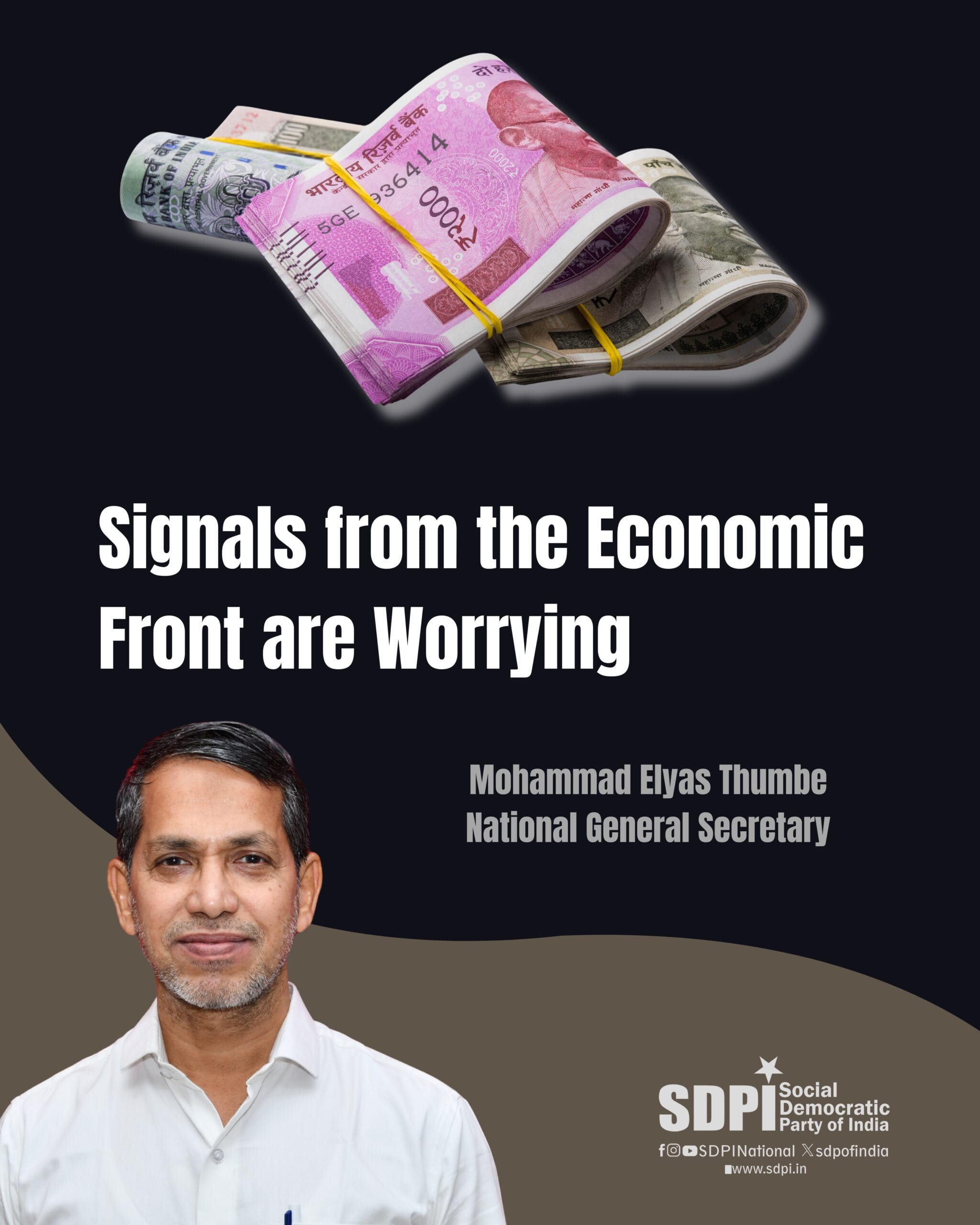
Signals from the Economic Front are Worrying
There are worrying signals from the Indian economy, which need to be taken seriously by the administrators and policymakers to avoid a major and unexpected breakdown in the coming days.
Most national newspapers and television channels were enthusiastically reporting on the 8.2 percent growth in the GDP in the second quarter of the current financial year (2025-26) for the three months from July to September. They made it as a sterling example of India’s growth story, especially under the guidance of Prime Minister Narendra Modi and his Finance Minister Nirmala Sitharaman, who has held the finance portfolio since 2019. But the fact is different, as this growth figure is an exception in an otherwise gloomy economic performance.
It is true that Corporate India has made good profits in the past one decade, especially some of those Gujarat-based businessmen who are known for their close proximity to the Prime Minister and his political party. Some of them are also close to the RSS leadership and are known to be the top financiers for the ruling party as well as its various arms that often spew venomous campaigns that divide the country on communal lines.
But the experience of the ordinary people, especially in the agrarian sector and the working class, is different. By most economic indicators, the small and medium category peasants are struggling and many households are now dogged by an agonising crisis of indebtedness. The returns from their crops are dwindling thanks to an increasing trend of farm product imports and rising cost of farming operations. When the Modi Government made efforts to introduce the four farm laws that together sought to undermine public investments in the farming sector and put it absolutely under corporate control, there were huge protests from farmers in most parts of India, ultimately forcing the Government to put the legislation in cold storage. But the distress in the farming sector continues and there are regular reports of farmer suicides, though most media houses no loner give them any significant space trying to hide the truth under the carpet.
Similar protests are now rising from the working class, who are practically losing their time-honoured rights, as the new labour codes are coming into operation. These four new codes will replace the series of labour laws the country had adopted in the past seven decades. Even the minimum wages, the mandatory eight-hour duty cycles, the various benefits available to workers including statutory rights like bonus and other allowances, etc., are to be spiked in the new labour regime where hire and fire will be the norm. This would mean a massive setback to the workers in the organised sector, while the majority of Indian workers who are in the unorganised sector and the gig economy would have no legal protections and no hopes for a secure future.
This is the gloomy situation we are facing in India today though the Government is making every effort to whitewash the situation through media campaigns and other forms of fudging the records. Its economic data collection and maintenance of statistics are now suspect and without any credibility. In fact, the IMF has downgraded India’s national accounts statistics to grade C, just above the lowest grade. This is worrying as any economy’s credibility and its ability to attract investments are based on the accuracy of the country’s accounts and statistics.
Hence the rosy image that the Government seeks to provide to the economy is not credible. It is possible that we might enter into a serious crisis unless corrective measures are urgently adopted. The only way forward for us is to provide a better deal to our ordinary people whose labour and consumption would keep the economy throbbing and not the sleazy corporates and their cronies in the corridors of power who amass their wealth in some secret hideouts based in foreign tax havens.
Mohammad Elyas Thumbe
National General Secretary

No Comments