
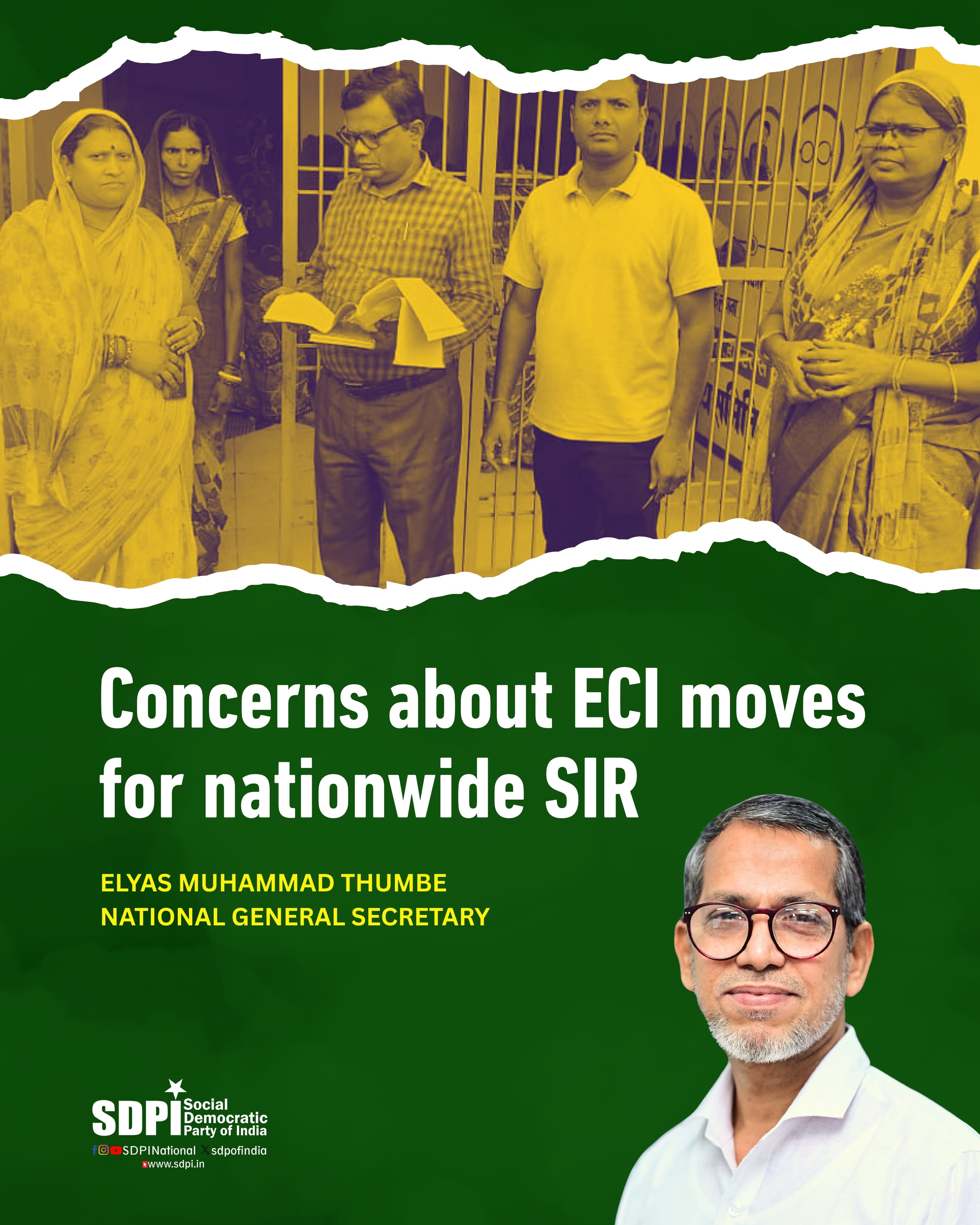
Concerns about ECI moves for nationwide SIR
The September 10 meeting of the Chief Election Officers of all States and Union Territories called by the Election Commission of India is supposed to plan for the nationwide Special Intensive Revision (SIR) of electoral rolls, on the lines of the one carried out in Bihar just ahead of the forthcoming Assembly elections.
The ECI move is raising some serious concerns, especially since the experience of the Bihar revision has been worrying with a substantial number of deletions from the voters list. The ECI had insisted on production of one of the 11 documents for being enlisted in the electoral rolls, and all of these documents were difficult to obtain. The most common identity documents like Aadhar card and ration cards were not accepted, though the Supreme Court intervened forcing the ECI to accept the Aadhar card also.
But the preliminary investigations into the revised electoral rolls, released after a strict order from the Supreme Court, has brought out many serious issues about the way the authorities have handled the exercise. There appears to be some hamhandedness in preparation of the list and possibly a deliberate attempt to keep out many genuine voters from it. Newspapers and political parties have pointed out that large number of people had been disenfranchised in the border districts and a large part of those left out from the list consist of voters from the weaker sections. According to one report, the deletions from Muslim community has been 18.4%.
In fact, a study of the electoral rolls made by The Hindu newspaper has brought out many inconsistencies that look highly suspicious, indicating some moves to delist many people. For example, the report has said that they could identify as many as eight types of serious problems in the rolls examined. These include unusually high proportions of young deaths, heavy gender bias in deletions, abnormally high deletion rates, 100% death-based deletions, high number of “absent” voters, suspicious patterns of “permanently shifted” women, etc. The details of these inconsistencies make a disturbing reading and call for a much serious inquiry as to how such abnormalities took place on a wide scale. The new allegations that the ECI officials refused to provide information to the Crime Branch regarding electoral roll fraud in Karnataka’s Alad Assembly constituency also points to the widespread nature of manipulations in recent times.
As per reports, the ECI plans to conduct intensive revisions in Bengal, Assam, Kerala and other states where elections are to be held in the next few months and then in every other part of India, to be competed by January 1 next year. The intensive revision is a time-consuming process which cannot be rushed, and the new information coming out from various sources on the problems that have crept into the Bihar rolls should be taken as a wake up call. All political parties and the democratically minded people should take a serious view of the way electoral roll revision is being rushed through in the country which could end up in disenfranchising many Indian citizens.
Elyas Muhammad Thumbe
National General Secretary

No Comments