
SDPI Holds Discussion Meeting and Passes Unanimous Resolutions on OBC Reservation Issues at Academy of Fine Arts, Kolkata
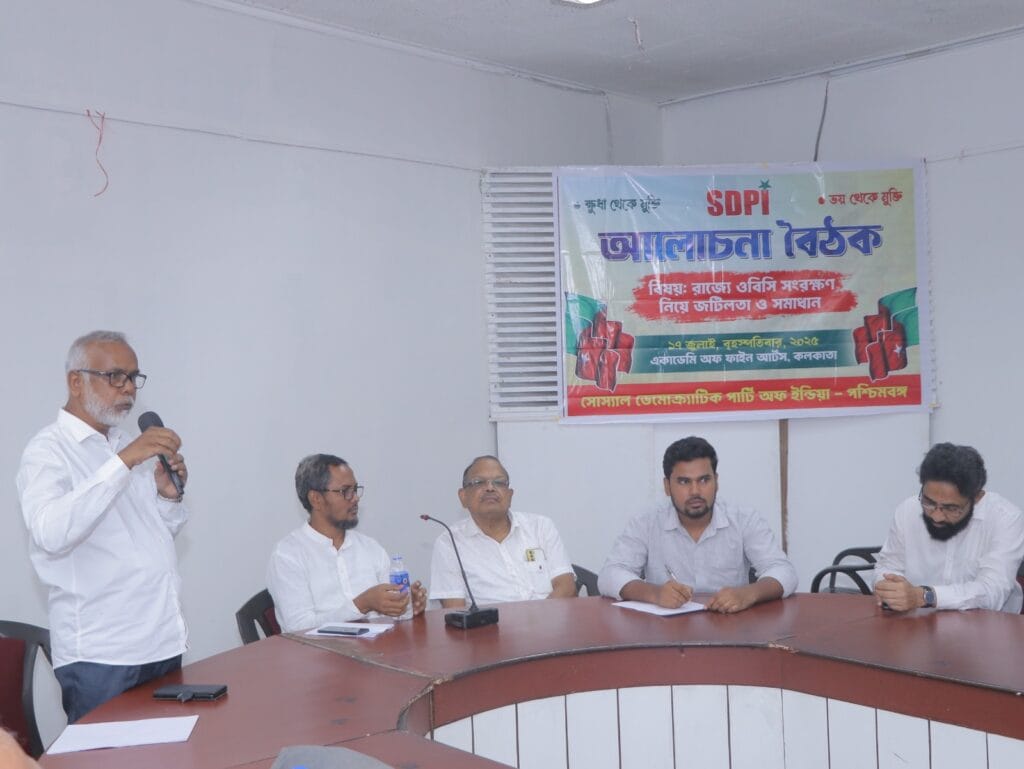
In light of the ongoing complexities surrounding OBC reservations in West Bengal and the recent observations and judgment delivered by the Calcutta High Court, the Social Democratic Party of India (SDPI) organized a significant discussion meeting at the Academy of Fine Arts, Kolkata.
The primary objectives of the meeting were to identify the key problems in the reservation system, analyze the role of the government, and chart out a roadmap for a united organizational response.
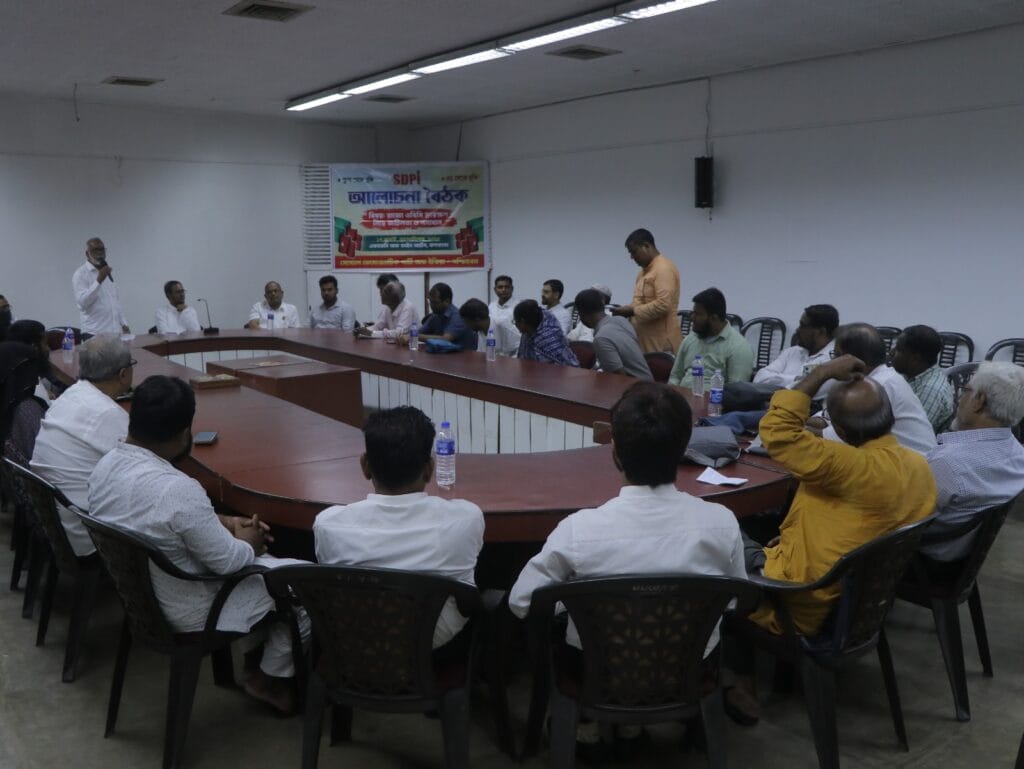
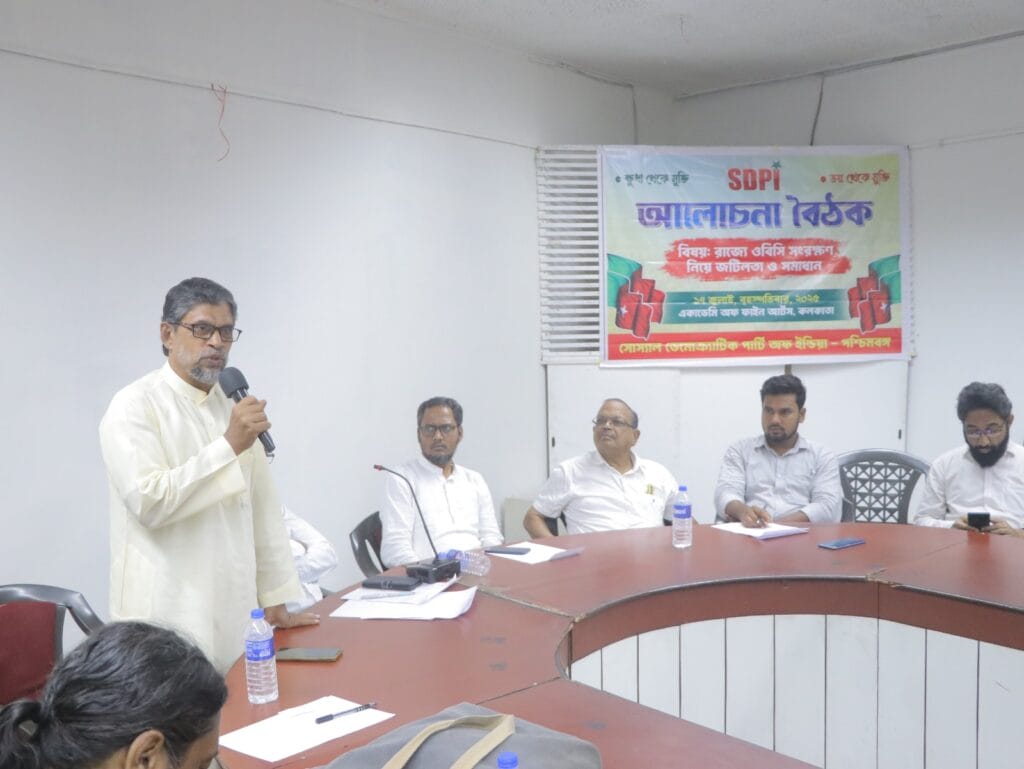
The discussion saw participation from representatives of various political parties, social organizations, and civil society groups. Key speakers included SDPI State Vice President Swapan Kumar Biswas, JDU’s Amitav Dutta, CPI(ML) Liberation’s Soumitra Bosu, Welfare Party’s Jalaluddin Ahmed, and Imtiaz Ahmed, State Convenor of Azad Samaj Party. UGC State General Secretary Pasarul Alam, Dr. Saliha Begum from the Bangiyo Shankhalaghu Parishad, Nirmal Pal, State General Secretary of the Paschim Banga OBC Manch, and Dr. Mohiuddin Mondal, a professor and PhD researcher from Amtala College, also shared their insights. Additionally, Sukriti Ranjan Biswas from the Constitution Bachao Manch and Mansur Ali from the Shershabadia Bikash Parishad addressed the gathering. Social workers Salahuddin, Abdur Rauf, and Jahan Ali Purkait also actively participated in the discussion.
Their involvement made the discussion pragmatic and impactful. Expressing concern, Pasarul Alam stated, “A team of 12 lawyers fought the OBC reservation case in the Calcutta High Court, but not a single one among them belonged to a minority background—this reflects the deep-rooted social inequality.” Amitava Dutta emphasized, “OBC reservation should not be based solely on economic criteria but also on educational and social backwardness.” Social activist Salahuddin declared firmly, “There can be no meaningful solution without proportionate political reservation for all communities.”
All participants collectively agreed that caste-based census could provide a concrete and long-term solution to the current crisis.
At the end of the session, the following seven resolutions were unanimously adopted by all participating political parties, social organizations, and social activists:
- Candidates from SC, ST, and OBC backgrounds must first be allowed to contest in unreserved seats. Only thereafter should they be considered for reserved seats.
- Separate lists must be maintained for ‘Backward’ and ‘More Backward’ classes among OBCs. The existing ‘Backward’ and ‘More Backward’ lists should not be altered. Individuals who were previously moved from the ‘More Backward’ list to the ‘Backward’ list must be reinstated.
- The sole basis of reservation must be social and educational backwardness.
- The OBC reservation quota in West Bengal must be increased to 27% (currently 17%). The additional 10% should be equally divided between ‘OBC A’ and ‘OBC B’ categories.
- The ‘Creamy Layer’ provision should be abolished.
- Reservation should be extended to the private sector as well.
- All OBC communities recognized in the state list must be brought under the purview of the central OBC list.
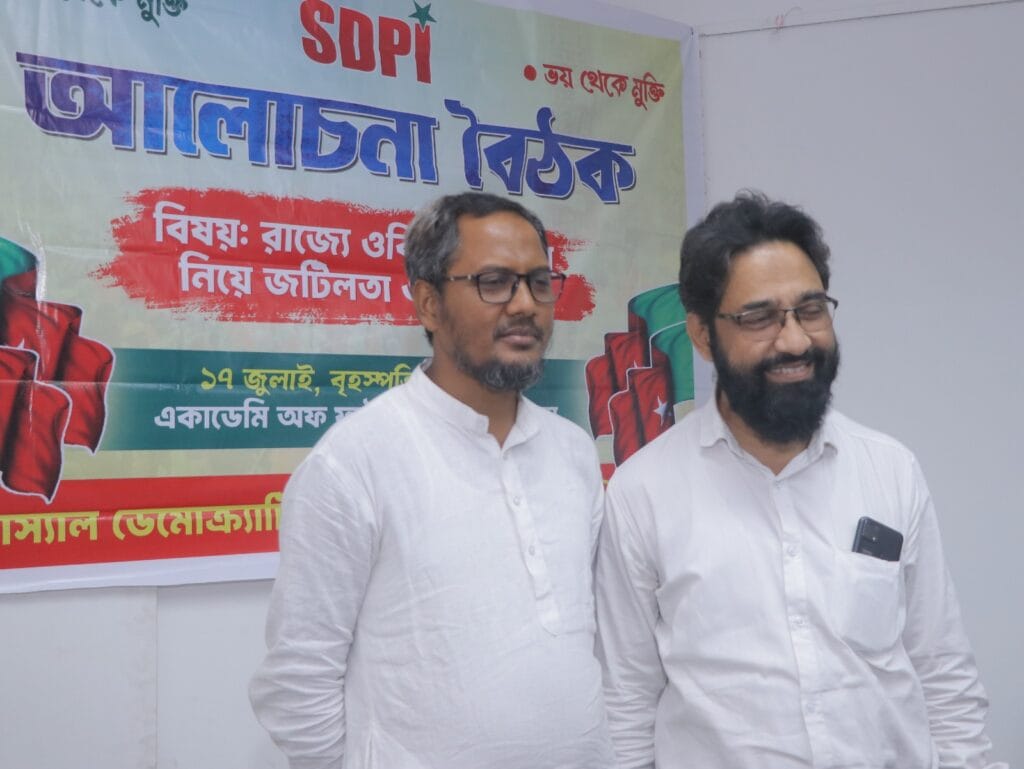
The meeting was presided over by SDPI State President Hakikul Islam and moderated by National Secretary Taiedul Islam.

No Comments