
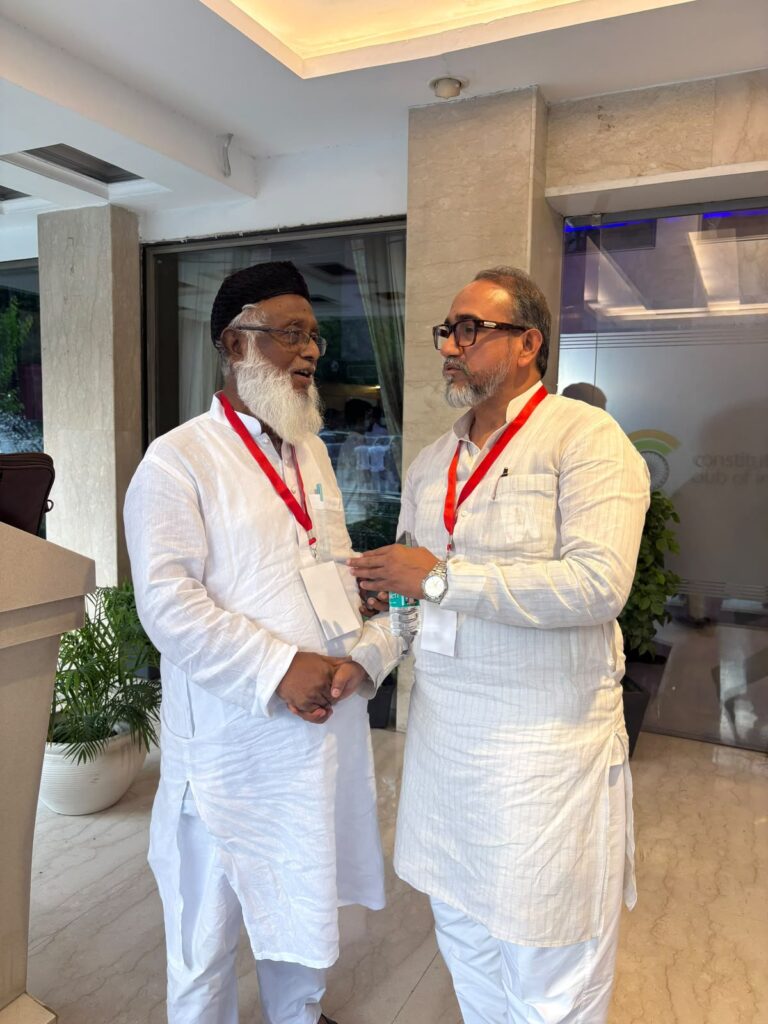
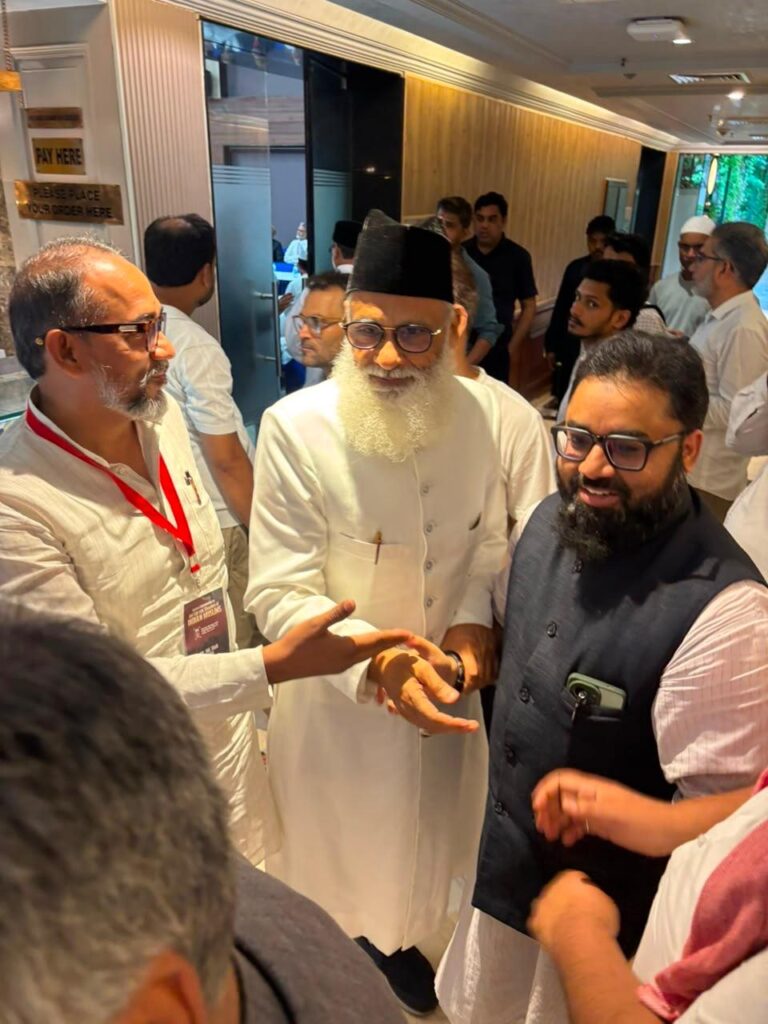
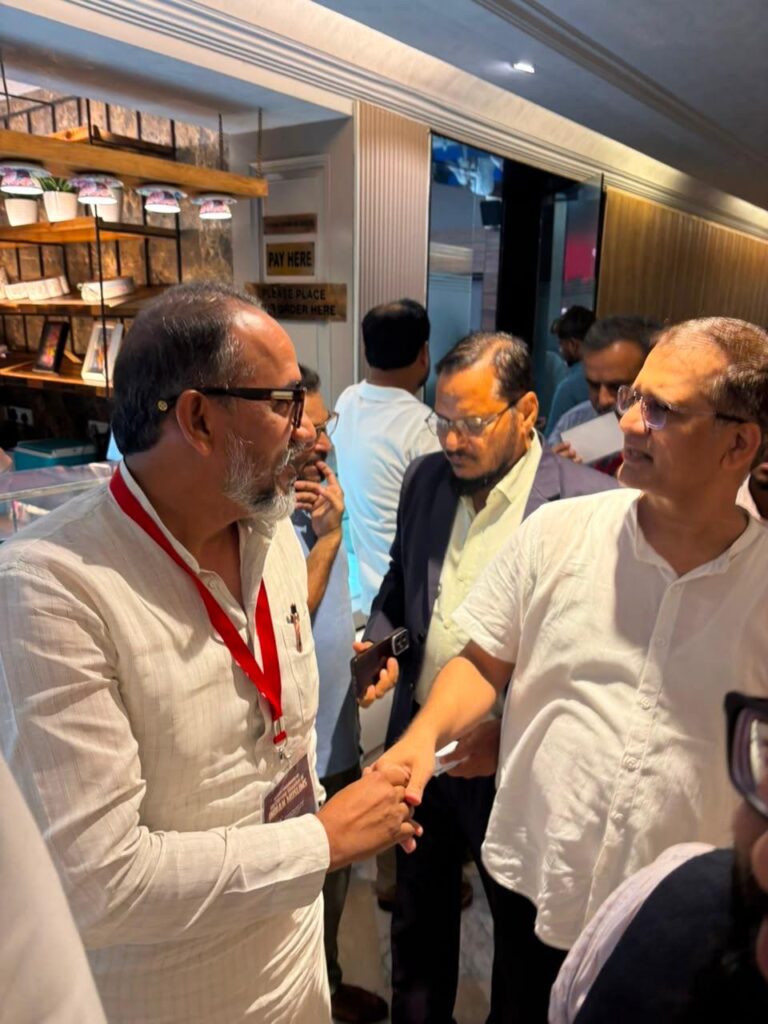
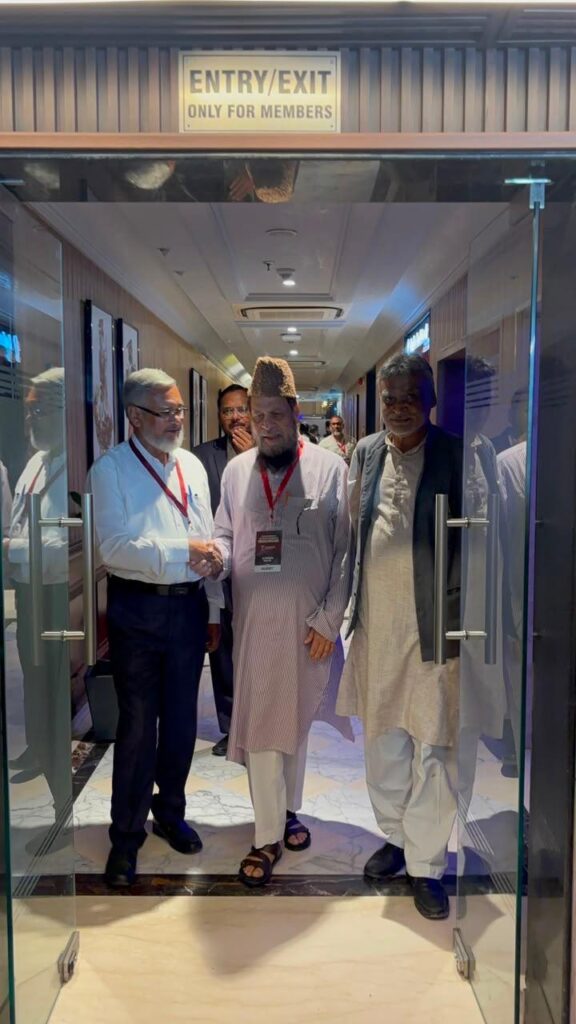
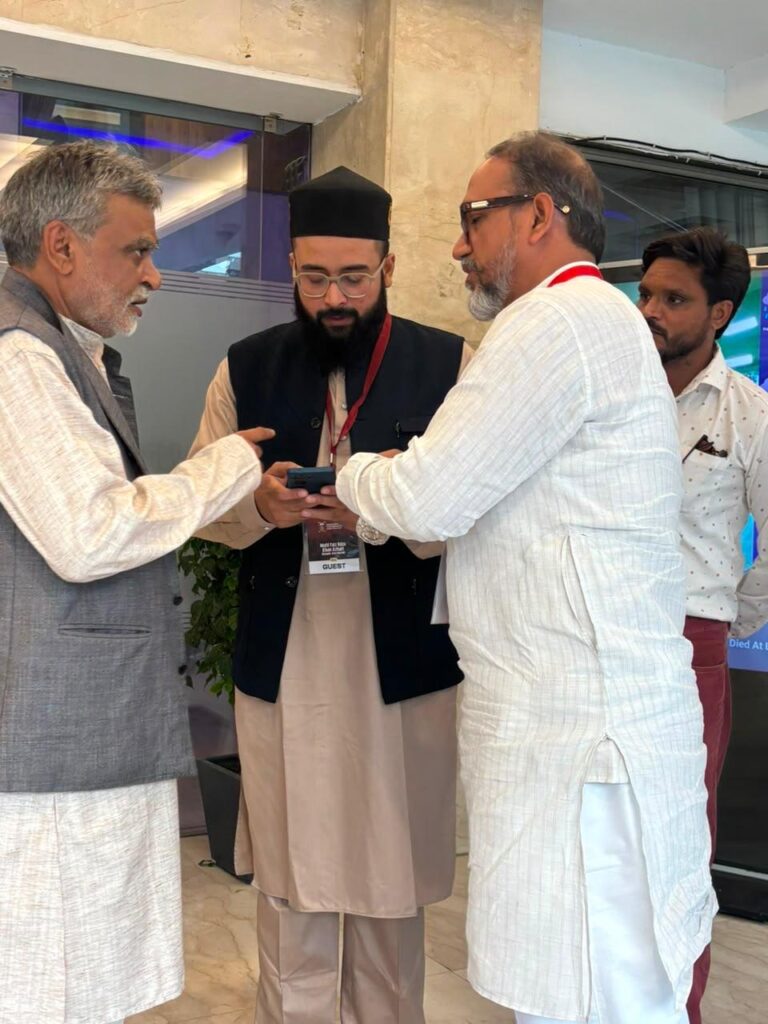
The National Consultation on the Current Situation of Indian Muslims was held on 24 July 2026 at the Deputy Speaker Hall, Constitution Club of India, New Delhi. The consultation was organised by the Indian Muslims for Civil Rights (IMCR) under the leadership of its Chairman and former Rajya Sabha Member of Parliament, Mohammad Adeeb. The event brought together Members of Parliament, Members of Legislative Assemblies, political leaders, religious scholars, legal experts, academics, and representatives of various social and political organisations from across the country to deliberate on the challenges confronting Indian Muslims and to discuss appropriate constitutional, legal, and democratic responses.
Among the prominent participants were Members of Parliament Iqra Hasan, Mohibullah Nadwi, Imran Masood, and Zia ur Rehman Barq; Dr. Farooq Abdullah, President of the Jammu and Kashmir National Conference and former Chief Minister of Jammu and Kashmir; Mehbooba Mufti, President of the Jammu and Kashmir Peoples Democratic Party and former Chief Minister of Jammu and Kashmir; Salman Khurshid, former Union Minister; Maulana Obaidullah Khan Azmi, Vice Chairman of the All India Muslim Personal Law Board (AIMPLB) and former Member of Parliament; Syed Sarwar Chishti, Gaddi Nashin of the Dargah Ajmer Sharif; Abu Asim Azmi, President of the Samajwadi Party Maharashtra unit and Member of the Maharashtra Legislative Assembly; and Muhammad Shafi, National Vice President of the Social Democratic Party of India (SDPI), along with representatives of numerous religious, social, and political organisations from across the country.
The consultation focused on the prevailing political and social situation of Indian Muslims and examined a wide range of issues affecting the community. Participants deliberated on incidents of communal violence, mob lynching, demolition drives targeting homes, mosques, and madrasas in several states, the implementation of the Uniform Civil Code in certain states, regulatory measures concerning madrasas, particularly in Uttarakhand, and broader concerns relating to discrimination, security, constitutional rights, and political representation. The discussions highlighted the need to safeguard constitutional values and strengthen legal and democratic mechanisms for the protection of fundamental rights.
The participants also deliberated on the need for greater coordination among political parties, religious institutions, civil society organisations, legal experts, and community leaders in addressing these challenges through constitutional and democratic means. The consultation emphasised the importance of evolving a collective framework to protect the rights guaranteed under the Constitution and to promote justice, equality, and communal harmony.
The national consultation followed a preparatory meeting held earlier this month in Nizamuddin, New Delhi, where the agenda and objectives of the gathering were finalised. The meeting reflected a broad consensus on strengthening unity among diverse organisations and leadership while pursuing peaceful, lawful, and democratic efforts to safeguard the rights, dignity, and interests of Indian Muslims.

No Comments